
Traditional QA Is Breaking Under Modern Delivery Pressure

Why Traditional QA is Breaking Under Modern Delivery Pressure
Software delivery has entered an era of acceleration. Continuous integration, microservices architectures, and cloud-native platforms have dramatically increased the speed at which organizations ship software. Yet Quality Assurance in many enterprises still operates with frameworks built for slower, predictable release cycles.
This mismatch is not theoretical. It is visible in day-to-day engineering pressure.
Regression cycles expand with every release. Automation frameworks grow brittle. Test maintenance consumes disproportionate effort. Defects escape into production despite rising QA investment.
The industry is not lacking tools. It is lacking intelligence in how testing adapts to change.
The Hidden Cost of Scaling Traditional QA
Most enterprises respond to complexity by adding more tests, more automation, and more tools. On paper, this looks like maturity. In practice, it often creates fragility.
Automation suites become harder to maintain than the applications they test. Teams spend weeks stabilizing scripts after UI changes. Regression becomes a bottleneck rather than a safety net.
The cost of quality rises silently:
- Increased maintenance effort
- Slower release cycles
- Growing infrastructure overhead
- Tester burnout and skill fatigue
Traditional QA scales effort linearly. Modern delivery requires exponential adaptability.
The Illusion of Test Coverage
High test coverage does not guarantee high quality.
Enterprises frequently discover that even extensive automation fails to detect real-world defects. Why? Because automation often replicates existing human assumptions rather than learning from new patterns.
Testing becomes a checklist activity rather than an intelligence system.
True quality requires:
- Continuous learning
- Risk prioritization
- Pattern recognition
- Adaptive regression strategies
This is where AI begins to change the equation.
From Automation to Intelligence
The next evolution of QA is not about more scripts. It is about smarter systems.
AI introduces adaptive capabilities into testing:
- Learning from defect history
- Understanding requirement intent
- Optimizing regression scope
- Identifying risk clusters
- Predicting release confidence
Testing shifts from static execution to dynamic intelligence.
Real-World Scenario: Regression Modernisation for a Major Retail Organization
When Changepond’s Digital Assurance team engaged this client, their QA picture looked familiar: a regression suite of over 4,200 scripts, maintained by a team of 18 testers, running a full cycle that took 11 days end-to-end. Releases were delayed twice in the preceding quarter because regression hadn’t completed in time. Defect escape rate to UAT stood at 22%.
The root cause was not a lack of automation — it was automation without intelligence. Scripts were written against known user journeys and ran in full on every release, regardless of what had actually changed in the codebase. Nobody knew which 20% of tests caught 80% of the defects.
What Changepond did
Over an 8-week regression modernisation engagement — using Changepond’s Qualifide platform and code-change impact analysis framework — the team restructured the client’s entire approach to regression:
- Impact-driven test selection: mapped every test script to the specific services and code modules it validates. Scripts are now triggered by change impact, not by calendar.
- AI-assisted test case generation: Qualifide analysed requirement documents and user stories to identify coverage gaps and auto-generated 340 new test cases covering previously untested edge-case flows.
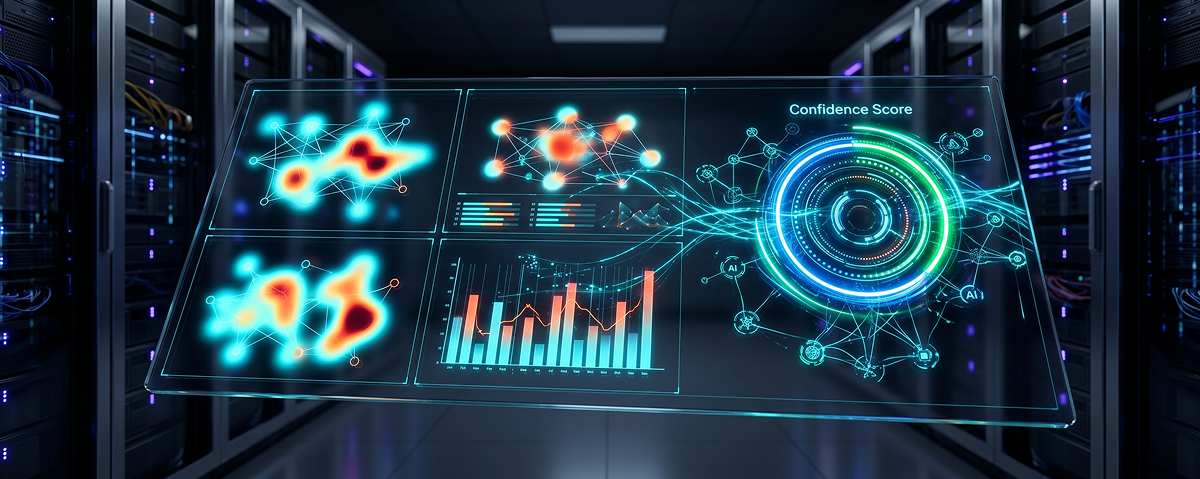
- Intelligent reporting: replaced a static 80-page regression report with a real-time quality dashboard surfacing release confidence score, risk-clustered defect heat maps, and go/no-go recommendations per squad.
- Shift-left validation: automated API contract testing introduced at the CI pipeline stage, catching integration failures before they reached the regression layer.
Outcomes after 90 days
| Metric | Result |
|---|---|
| Regression cycle time | 11 days → 4.5 days (59% reduction) |
| Defect escape rate to UAT | 22% → 8% |
| Script maintenance effort | 38% of QA time → 14% |
| Release frequency | Bi-weekly → weekly |
| Test coverage (new edge cases) | +340 AI-generated test cases |
The most significant outcome was cultural, not just operational. QA moved from a blocking gate to a release confidence engine. Squad leads began referencing the quality dashboard in sprint planning not just at the end of a cycle.
From Test Automation to Testing Intelligence
The next evolution in quality engineering is not about writing more test scripts. It is about building systems that learn, adapt, and predict.
AI-augmented testing introduces capabilities that static automation cannot replicate:
- Defect prediction learning from historical patterns to flag high-risk code areas before release
- Intelligent test generation understanding requirement intent to create contextually relevant cases
- Dynamic regression optimisation scoping regression to what actually changed, not everything
- Release confidence scoring quantifying deployment risk across the full SDLC pipeline
Testing shifts from static execution to dynamic intelligence. QA stops being a downstream checkpoint and becomes a predictive engineering discipline one that informs delivery decisions, not just validates them.